
 English
  Español
  Português




This October and November, Buidlers Bolivia is organizing the Stellar Bolivia University Tour and National Hackathon, a nationwide initiative designed to introduce more Bolivian students and developers to Stellar and help them turn local financial problems into working products. The program will begin with university events in La Paz, El Alto, Cochabamba and Santa Cruz, followed by a seven-day national hackathon where teams will build on Stellar.
HedgePay is joining the initiative as part of the growing Stellar ecosystem supporting builders in Bolivia.
Bolivia and the rise of stablecoins
Stablecoin adoption in Bolivia has accelerated rapidly. In June 2024, the Banco Central de Bolivia changed its rules to allow the use of electronic payment channels for transactions involving virtual assets. One year later, the Central Bank reported that transaction volume through those channels had increased from $46.5 million in the first half of 2024 to $294 million during the same period in 2025 — an increase of more than 630% — and that cumulative transactions since the regulatory change had reached approximately $430 million.[1]
That regulated activity captures only part of the broader market. According to Chainalysis, Bolivia accounted for an estimated $14.8 billion in cryptocurrency transaction volume during the period covered by its 2025 Latin America analysis.[2] The two figures measure different scopes — one counts flows through authorized payment channels, the other estimates overall on-chain activity — but both show that crypto-related activity in Bolivia is substantial.
Behind those numbers is a very practical use case. Access to US dollars has become increasingly difficult in Bolivia, which makes dollar-linked digital assets useful not simply as investments, but as an alternative way to preserve value and move money. That shift is now visible inside the banking system itself: Banco BISA’s CriptoBISA service allows customers to buy, sell and custody USDT from their Bolivian bank account, and eligible customers can also sell those USDT and use the resulting dollars for international transfers.[3]
Stablecoins are therefore moving beyond crypto-native users and increasingly becoming part of Bolivia’s financial infrastructure. In a market where demand for digital dollars already exists, the next challenge is usability — turning stablecoins from something people can access into something they can use naturally in everyday financial life. That is where products like HedgePay become relevant, by making stablecoins easier to hold, transfer and use without requiring people to interact directly with blockchain infrastructure.
A growing Stellar ecosystem in Bolivia
That is also why Stellar is particularly relevant here. Stellar is designed around payments, stablecoins and the movement of value across borders — use cases that map closely to many of the financial needs visible in Bolivia. But infrastructure alone does not create an ecosystem. An ecosystem also needs developers, local companies, educational initiatives and products that translate that infrastructure into something people can actually use, and that layer is now beginning to take shape in Bolivia.
Buidlers Bolivia has spent the past year organizing technology events across the country and increasingly connecting Bolivian developers with Stellar. Among those initiatives was the Stellar LATAM Hackathon – Satélite +591 in Santa Cruz. Hosted at UNIFRANZ, the event gave local developers a physical place to participate in the regional Stellar hackathon, build alongside other teams and join office hours with members of the Stellar ecosystem.[4] The hackathon included practical tracks around:
- borderless money and remittances;
- digital identity;
- infrastructure for social impact.
Buidlers Bolivia has also brought startup and ecosystem opportunities directly into universities. At Fondos para tu Startup at UMSA in La Paz, students were introduced to funding opportunities, hackathons and technology ecosystems including Stellar.[5] Other initiatives have targeted founders who are already operating, including Stellar en Bolivia: proyectos en mainnet at UPB in Santa Cruz, a session on how Bolivian startups can get paid in dollars, including through Stellar-based payment rails.[6]
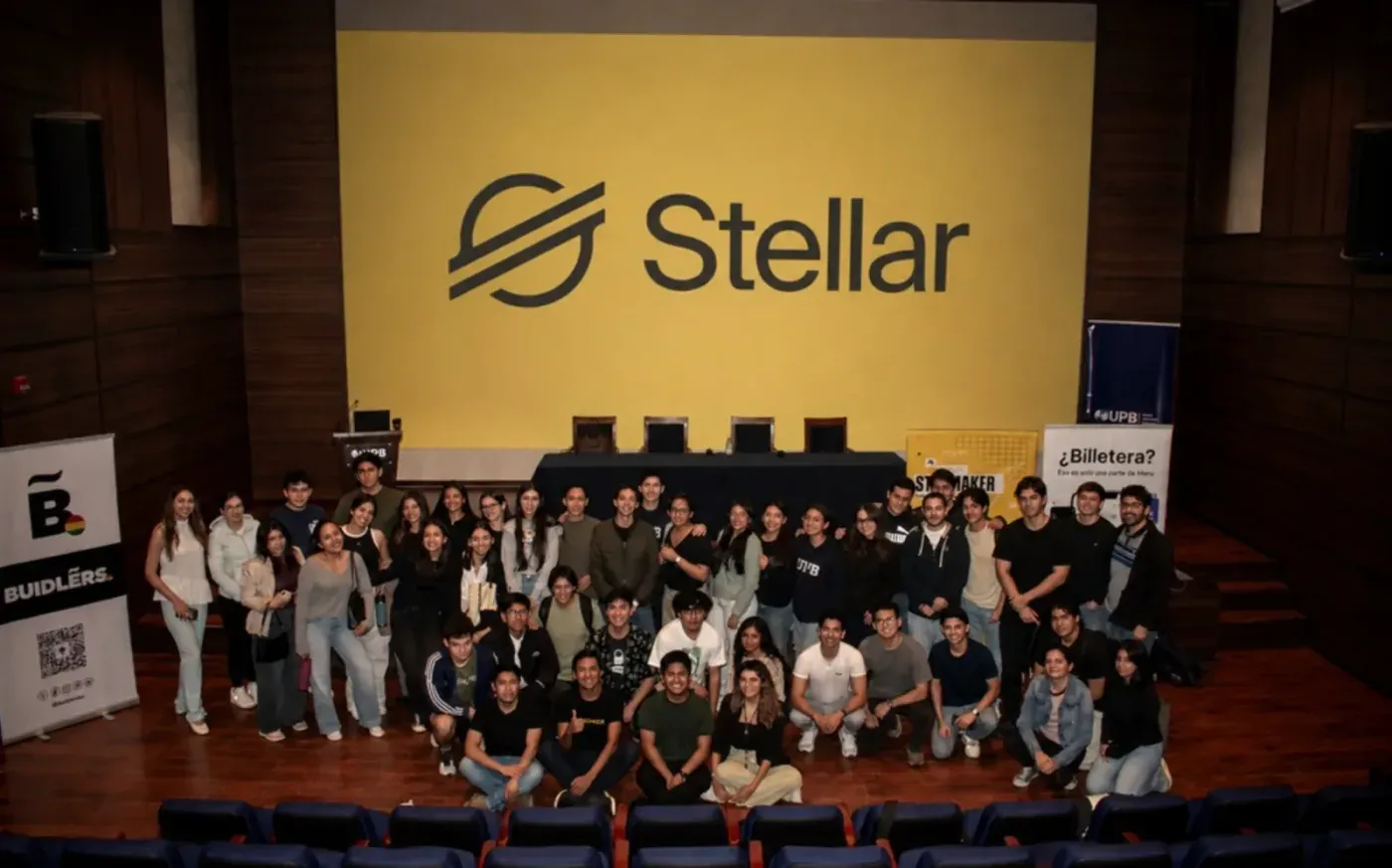
Taken together, these events are beginning to form a local builder pipeline rather than a collection of isolated community activities. Students are introduced to the technology, developers get opportunities to experiment with it, teams participate in hackathons, and some of those teams can eventually continue into products or companies.
HedgePay is part of that same ecosystem. The project was selected for a Stellar Community Fund Build Award, receiving support to continue developing its self-custodial stablecoin and DeFi infrastructure on Stellar and Soroban.[7] The Stellar Community Fund exists specifically to help projects move from ideas toward working products and companies, and the opportunity in Bolivia is now to create more pathways for local developers to follow a similar progression from initial experimentation to working products.
From local events to a national hackathon
That is the objective of the Stellar Bolivia University Tour and National Hackathon. Instead of organizing another isolated event, Buidlers Bolivia is expanding its existing work into a national program connecting universities, developers and the wider Stellar ecosystem. The initiative will happen in two phases: a university tour in October that brings new developers in, and a national online hackathon in November that gives them seven days to build.
Phase 1: University Tour — October 2026
The first phase will bring Stellar directly to universities and developer communities across four of Bolivia’s main technology hubs:
- La Paz
- El Alto
- Cochabamba
- Santa Cruz
Each session will introduce students to Stellar and to practical financial use cases already relevant in Latin America, including stablecoins, payments, remittances and on/off ramps. There will also be a hands-on component: rather than only listening to presentations about blockchain, participants will create a wallet and make their first Stellar transaction. The organizers expect to reach approximately 150 to 300 students across the four cities, and the tour doubles as a way to find the developers interested in taking the next step and actually building something.[8]
Phase 2: National Online Hackathon — November 2026
After the tour, developers from across the four participating cities move into the main event: a seven-day national online hackathon built on Stellar, planned for November 2026. Because it runs online, teams from La Paz, El Alto, Cochabamba and Santa Cruz will build in parallel during the same week, with three winning projects selected from each city.[8]
During the week, teams work on their products, publish daily public progress updates and appear in a live ranking that runs throughout the hackathon. The format is deliberate: instead of teams disappearing until a final submission, progress is visible from day one, which keeps momentum up and lets participants see what other Bolivian teams are building at the same time.
Projects are expected to use Stellar infrastructure, and the initiative is oriented toward the financial problems that are most visible in Bolivia. Examples of the kind of products that fit include:
- stablecoin payments;
- remittances and cross-border money movement;
- wallets and on/off ramps;
- digital identity;
- financial infrastructure and tools designed around Bolivian financial needs.
These are examples rather than fixed categories — the exact projects will be determined by the participating teams.
Participants will also have access to tooling and mentorship from projects already active in the Stellar ecosystem, including Pollar, Trustless Work and Vaquita. Each represents a different part of the ecosystem, from payments infrastructure to trustless agreements and stablecoin-based financial products, so teams are not only learning Stellar at the protocol level but also getting exposure to products and infrastructure already operating on top of the network.
At the end of the week, the top three projects associated with each of the four cities will be selected, resulting in 12 winning teams in total. The campaign allocates a $3,000 total hackathon prize pool for 12 hackathon prizes, which corresponds to approximately $250 per winning team based on the current budget.[8]
The objective, however, is not simply to distribute prizes. Winning and promising teams enter Buidlers Bolivia’s pipeline for continued support after the event, with the goal of helping them keep developing their products, access ecosystem mentorship and potentially reach broader opportunities such as the Stellar Community Fund. Registration and operational details — timelines, submission format and eligibility — will be published by Buidlers Bolivia through its official channels.
How to participate and what participants can expect
 Registration
 opens on the Buidlers Bolivia calendar
View event calendar
Registration
Registration opens on the Buidlers Bolivia calendar
View event calendar
Registration details have not yet been published. They will be announced on the Buidlers Bolivia event calendar and its official channels on X and LinkedIn.[9]
Participants who join through the October tour can expect an in-person introduction to Stellar at their university, including creating a wallet and making a first Stellar transaction. Those who continue into the November hackathon get seven days of building alongside other Bolivian developers, with tooling and mentorship from Stellar ecosystem projects, daily public progress updates and a live ranking during the week.
Participating teams will compete for 12 prizes — three per city — from the $3,000 hackathon prize budget, corresponding to approximately $250 per winning team based on the current campaign allocation. Promising projects also receive continued support from Buidlers Bolivia after the event rather than the program ending when prizes are announced.[8]
Why HedgePay is supporting the initiative
For HedgePay, supporting this initiative is a natural extension of what we are already building. Bolivia already has many of the conditions that make stablecoin infrastructure useful:
- strong demand for dollar-denominated value;
- rapidly growing virtual-asset activity;
- cross-border financial needs;
- increasing integration between crypto and traditional finance;
- and a technically capable developer community.
What remains comparatively small is the number of products built locally around those conditions, and that is where a stronger developer ecosystem can make a difference. HedgePay is already building inside the Stellar ecosystem, and the Bolivia University Tour and National Hackathon creates a way for more local developers to enter that same ecosystem. Alongside projects including Pollar, Trustless Work and Vaquita, we want more Bolivian developers to discover Stellar, experiment with the infrastructure and eventually build products of their own.
A stronger local ecosystem produces more than new applications. It creates infrastructure, integrations, technical knowledge, companies and future partnerships. Some of the products created by Bolivian teams may eventually become infrastructure used by HedgePay, some may complement what we are building, and others may solve completely different problems. That range of outcomes is exactly what a healthy ecosystem should produce.
Building the Stellar ecosystem from Bolivia
Bolivia has the demand, the developers and a community now connecting both with the Stellar ecosystem. The next step is turning that momentum into products, and the Stellar Bolivia University Tour and National Hackathon is designed to do exactly that.
For HedgePay, this is not simply about sponsoring a hackathon. It is about helping build an ecosystem where stablecoin-based products do not all need to come from outside Bolivia. Bolivian developers understand the country’s financial realities firsthand: how people access dollars, how money moves locally and which problems are worth solving. Access to Stellar infrastructure, mentorship and funding can help turn that knowledge into products.
That is why we believe the next generation of financial infrastructure for Bolivia should also be built from Bolivia, and why HedgePay wants to be part of that process.
How to support the initiative
Organized by Buidlers Bolivia
Stellar Bolivia: University Tour + National Hackathon
Support on Giveth
You can support the Stellar Bolivia University Tour and National Hackathon on Giveth. The campaign is participating in a quadratic funding round, meaning individual contributions can help increase the amount of matching funding received.
For readers who want to back the program financially rather than take part, the organizers are currently raising $4,500 to finance it.[8] The planned budget includes:
- $3,000 for 12 hackathon prizes;
- $600 for intercity transportation;
- $500 for Spanish-language content production;
- $400 for materials and snacks during university sessions.

